How Paul Built a Business That Could Grow Without Taking on a Huge Overhead
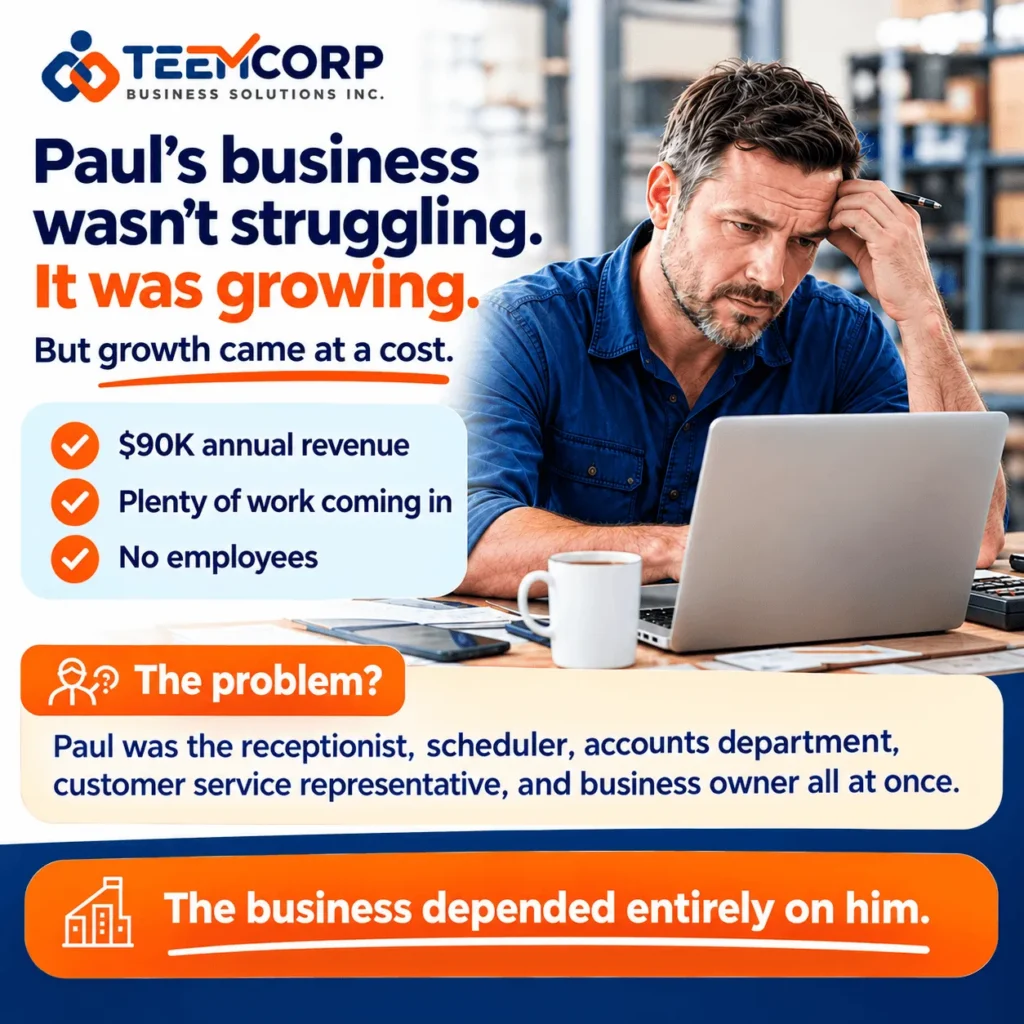
Many Australian small business owners face the same challenge: demand is growing, but there simply are not enough hours in the day. As businesses expand, owners often find themselves managing customer enquiries, scheduling, invoicing, administration, technology, marketing, and service delivery all at once. While this hands-on approach helps businesses get started, it can eventually become the biggest obstacle to small business growth. This small business case study explores how one Australian trade services business created additional capacity, improved operational efficiency, and built scalable business systems that supported long-term growth. Paul built his trade services business from the ground up. After four years of hard work, the business was generating around $90,000 per year. Demand was steady, customers continued to enquire about services, and Paul had earned a strong reputation within his local market. However, one challenge continued to hold the business back. Despite the growing demand, the business could not grow any further without him. Like many owner-operated businesses, critical functions such as customer service, scheduling, invoicing, administration, technology, and marketing remained heavily dependent on the owner. Although this approach worked in the early stages, it eventually became a barrier to sustainable growth. The business was not short of demand. Instead, it was short of capacity. As a result, growth opportunities became increasingly difficult to manage, even though there was no shortage of work available. According to the Australian Chamber of Commerce and Industry, many Australian businesses continue to face ongoing skills shortages and rising labour costs. Consequently, many organisations are exploring alternative workforce models and overseas talent solutions to access specialised skills, improve operational capacity, and support sustainable small business growth. The Small Business Growth Challenge Facing Australian Business Owners Like many small business owners, Paul gradually became responsible for every function of the business. At first, this did not seem like a problem. When you start a business, wearing multiple hats is often necessary. Not only does it reduce overheads, but it also helps owners understand every aspect of their operations. However, as revenue grows and customer demand increases, the same approach can become a serious limitation. For Paul, administrative work was beginning to pile up. Meanwhile, customer response times were becoming slower. In addition, new opportunities were being missed simply because there was not enough time available to follow them up properly. Most importantly, every hour spent on administration was an hour not spent generating revenue. As a result, Paul began to realise that the real question was not: How do I get more customers? Instead, the question became: How do I create enough capacity to serve more customers? That shift in thinking ultimately changed the direction of the business. Rather than immediately hiring additional tradespeople or increasing fixed overheads, Paul decided to identify exactly where his time was being consumed. The answer was clear. Simply put, too many important business functions were dependent on the owner. Consequently, every operational issue, customer request, and administrative task eventually made its way back to Paul. To solve the problem, he partnered with TeemCorp’s Workforce Solutions team to identify practical ways to create additional capacity without significantly increasing local staffing costs. Creating Capacity Through Workforce Solutions To begin with, the first recommendation was straightforward. Paul needed administrative support that could take ownership of routine yet essential business functions. As a result, he could spend more time focusing on revenue-generating activities and long-term business development. A highly qualified personal assistant was brought into the business, taking responsibility for: This support formed part of a broader https://teemcorp.com.au/business-support-services/business support services strategy designed to reduce owner workload, improve customer responsiveness, and create additional capacity for growth. However, the support extended far beyond administration. The assistant became a valuable point of contact for customers and helped ensure enquiries were handled promptly. For example, when Paul was travelling between jobs, the assistant could monitor schedules, provide updates to customers, and answer routine questions on his behalf. Although these tasks may seem small individually, together they delivered significant improvements. As a result: The investment was approximately $2,000 per month. However, for Paul, it represented far more than the cost of an assistant. Instead, it was an investment in buying back his time, improving efficiency, and creating capacity for future small business growth. From Working in the Business to Working on the Business Before hiring support, most of Paul’s day was spent reacting to immediate demands. Customer calls needed attention. Emails required responses. Quotes had to be prepared. Invoices needed to be issued. Meanwhile, scheduling and customer updates continued to compete for time. Consequently, strategic activities such as planning, marketing, business development, and process improvement were often pushed aside. With support in place, Paul could finally focus on the activities that drive long-term success. These included: This represented the first major shift in the business. Nevertheless, administrative support alone would not create a scalable operation. To achieve sustainable small business growth, Paul also needed documented systems, stronger processes, and technology capable of supporting future expansion. Frequently Asked Questions About Small Business Growth How can a small business create more capacity? Small businesses can create additional capacity by delegating administrative work, outsourcing specialist functions, implementing systems, and adopting technologies that reduce manual tasks. When should a business hire administrative support? Administrative support becomes valuable when business owners spend more time handling operational activities than focusing on revenue generation, sales, customer relationships, and business growth. Why are systems important for business growth? Systems improve consistency, reduce errors, increase efficiency, and make it easier for businesses to scale without relying on a single individual. What are the benefits of workforce solutions? Workforce solutions provide access to skilled professionals, improve operational capacity, support growth, and help businesses manage costs more effectively. How can business support services improve efficiency? Business support services help reduce administrative workloads, improve responsiveness, streamline operations, and allow business owners to focus on strategic growth activities. Is Your Small Business Growth Being Limited by Capacity? If you are spending too much time on administration, customer enquiries, scheduling, invoicing,
Why Small Businesses Struggle To Scale And What To Do About It
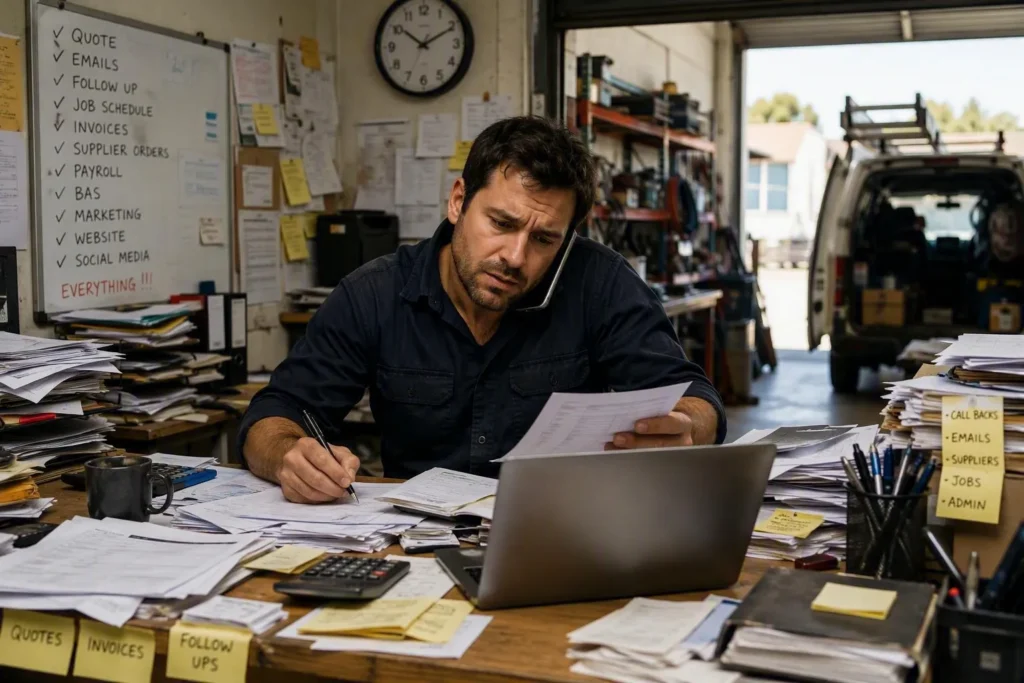
Small business growth stalls when the owner is the system. Learn the signs of a capacity problem, the cost of owner dependency, and a three-step framework for sustainable scale. The Real Reason Growth Stalls Ask most small business owners why they haven’t grown and they’ll point at the market. Not enough leads. Too much competition. Customers slower to commit. Yet when we sit down with trade and service businesses across Australia, the numbers usually tell a different story: the enquiries are there, the reputation is there, and the work is there. What’s missing is room to take it on. That’s the uncomfortable truth behind stalled small business growth. Most small businesses don’t have a sales problem. They have a capacity problem. And capacity problems don’t announce themselves — they show up as late nights, unanswered voicemails, quotes that go out three days late, and a nagging sense that the business would fall over if the owner took a fortnight off. This article breaks down how to recognise a capacity ceiling, what owner dependency actually costs, and a practical three-step framework for building business scalability without adding heavy overhead. Signs Your Business Has A Capacity Problem A capacity problem is easy to misdiagnose because it wears the costume of a sales problem, a staffing problem or a motivation problem. Here’s what it really looks like from the inside: If three or more of these are true, the constraint isn’t demand. It’s throughput. More marketing spend at this point simply increases the number of people you disappoint. The Hidden Cost Of Owner Dependency Owner dependency feels efficient. Nobody knows the business better than you, nobody cares more, and doing it yourself avoids the cost of a wage. But that logic hides four expensive leaks. 1. Opportunity cost on every hour An hour spent reconciling invoices is an hour not spent quoting, delivering or building relationships. When owner time is the scarcest resource in the business, spending it on tasks that could be delegated for a fraction of the rate is the single most expensive decision made each day. 2. Response time decay In trade and service markets, the first credible responder wins a disproportionate share of jobs. A business that replies in two hours converts dramatically better than one that replies in two days — same reputation, same pricing. Slow responses don’t generate a complaint; they generate silence, which is why this leak goes unnoticed for years. 3. Decision fatigue and quality drift When every decision routes through one person, the quality of decisions degrades across the day. Strategic thinking gets pushed to whatever energy remains at 9pm — which is usually none. Poor business efficiency at the top compounds through every other function. 4. An unsellable, unscalable asset A business whose processes live only in the owner’s head has limited transferable value. Systemisation isn’t bureaucracy — it’s what turns a job into an asset. The Three-Step Framework For Sustainable Growth Capacity is rebuilt in a sequence, not all at once. Support first, so you get time back. Systems second, so the time you got back doesn’t leak away. Marketing third, so new demand lands on a business that can absorb it. 1. Strategic Support The fastest way to create capacity is to move recurring, rules-based work off the owner’s desk. A strategic virtual assistant absorbs enquiry handling, scheduling, quotes and invoices, purchase orders and routine customer communication. Virtual assistant services work here because the cost scales with the hours you actually need — no office, no equipment, no fixed full-time wage before the revenue exists. The measurable outcome is simple: the owner shifts from working in the business to working on it, and enquiries get answered while the owner is still on site. 2. Systemisation Delegation without systems just relocates the chaos. The second phase makes the business legible: a website that answers common questions, business email, VOIP phones so calls follow the team rather than a single mobile, documented standard operating procedures, and remote support workflows. Good business systems mean a new team member can be productive in days rather than months, and that service quality no longer depends on who happens to pick up the phone. This is where business process improvement pays for itself twice — once in time saved, once in errors avoided. 3. Marketing & Lead Generation Only once there’s capacity and structure does it make sense to increase demand. SEO, a properly optimised Google Business Profile, consistent social media and conversion optimisation turn sporadic word-of-mouth into predictable pipeline. The point of lead generation systems isn’t maximum volume. It’s a steady, forecastable flow that matches the capacity you’ve built — growth you can actually deliver on. The Sequence Matters Support → Systems → Growth Run these out of order and you either burn out the owner or generate leads the business can’t service. Real Business Example A trade services business came to TeemCorp with what the owner described as a growth problem. In practice, he was the receptionist, IT manager, marketing manager, operations manager and accounts department. Work was coming in. Nothing could move faster than he could. Phase one introduced a strategic virtual assistant to handle administration, enquiry response, scheduling, quotes, invoices and purchase orders. Within weeks, enquiries were being answered during business hours rather than after dinner. Phase two built the infrastructure: website, business email, VOIP phones, standard operating procedures and remote support workflows. The business became systemised and ready for growth rather than dependent on one person’s memory. Phase three switched on demand — SEO, Google Business Profile, social media, lead generation and conversion optimisation — producing growth that was predictable and manageable. The outcome: less stress, more capacity, better systems, improved responsiveness, greater profitability, improved customer experience, and enough confidence to say yes to larger opportunities. As the owner put it: “The issue wasn’t sales. The issue was capacity.” Send an email to info@teemcorp.com.au to REQUEST THE FULL FRAMEWORK. Practical Steps Business Owners Can Take Today You don’t need a transformation programme to start. You need one week of honest data and one decision. Small business productivity improves fastest when the owner stops
Offshore Workforce Solutions: Reduce Costs & Increase Capacity

Offshore workforce solutions are becoming an increasingly popular strategy for small businesses looking to reduce costs, increase capacity, and scale efficiently. Rising labour costs, staff shortages, and economic uncertainty are encouraging many Australian businesses to explore smarter ways to grow while controlling overheads. According to recent NAB SME insights, many Australian businesses continue to experience margin pressure from rising overheads and softer trading conditions. As a result, more business owners are focusing on efficiency, cost control, and alternative workforce strategies to support growth. At the same time, the Australian Bureau of Statistics Wage Price Index continues to highlight ongoing wage growth pressures across Australia. For many SMEs, local hiring is becoming increasingly expensive, making it harder to expand teams without impacting profitability. For many business owners, the challenge is not finding customers. The challenge is finding enough time, resources, and support to keep up with growth. Administrative work builds up. Customer enquiries require attention. Reports need to be completed. Schedules need to be managed. Business owners often spend more time keeping the business running than growing it. If this sounds familiar, you’re not alone. Many Australian businesses do not have a demand problem. They have a capacity problem. That’s where offshore workforce solutions can help. Teemcorp helps Australian small businesses reduce costs, increase capacity, and scale efficiently through fully managed workforce solutions. Businesses gain dedicated offshore professionals while retaining day-to-day control of their operations. Teemcorp manages recruitment, onboarding, workforce administration, and employee support, allowing business owners to focus on growth. Common Challenges Facing Small Businesses Many Australian SMEs encounter the same obstacles as they grow: Over time, these challenges can create bottlenecks that limit growth and reduce productivity. The Capacity Trap Many business owners wear too many hats. On any given day they may be responsible for: As the business grows, so does the workload. Eventually, there simply are not enough hours in the day. Signs Your Business Has Reached Capacity The problem is often not demand. The problem is capacity. What Are Offshore Workforce Solutions? Offshore workforce solutions allow businesses to hire dedicated professionals who work remotely as part of their team. These professionals work within your existing systems, processes, and workflows. Rather than managing recruitment and employment administration internally, businesses can partner with a provider that handles the process for them. Teemcorp’s managed workforce model includes: This approach gives business owners more time to focus on customers, operations, and growth. Reduce Labour Costs Without Sacrificing Quality Labour costs remain one of the biggest challenges facing Australian SMEs. Recent ABS data shows wage growth continues to place pressure on business margins, particularly for businesses looking to expand through traditional local recruitment. Offshore workforce solutions provide access to skilled professionals at a lower cost than many local hiring options. Common offshore roles include: This allows businesses to increase capacity while maintaining stronger cost control. Increase Capacity Without Increasing Overheads One of the biggest advantages of offshore workforce solutions is the ability to grow without significantly increasing overheads. Instead of delaying growth due to recruitment costs, businesses can add resources that support daily operations. This creates more time to focus on: The result is a more scalable business that can support long-term growth. Why More Businesses Are Choosing Offshore Workforce Solutions Australian businesses are increasingly looking for ways to improve efficiency and control costs. Recent SME market analysis indicates that many businesses are investing in productivity improvements, workforce optimisation, and operational efficiency initiatives to protect margins and improve performance. This trend is driving increased adoption of offshore workforce solutions. Key benefits include: For many growing businesses, offshore staffing is no longer viewed as a temporary solution. It has become a practical long-term business strategy. Real Business Outcomes Offshore workforce solutions deliver more than cost savings. They help businesses create capacity, improve service delivery, and strengthen operations. Teemcorp supports Australian businesses with dedicated offshore professionals across administration, customer service, operations, lead generation, and back-office support. This allows business owners to spend less time managing routine tasks and more time focusing on business growth. To see how businesses have benefited from our workforce solutions, read our case studies. Businesses commonly achieve outcomes such as: The Teemcorp Difference Teemcorp was built around a simple objective. Help Australian small businesses reduce costs, increase capacity, and scale efficiently. Our workforce solutions are designed to be practical, scalable, and commercially focused. Businesses benefit from: Our goal is simple. Provide businesses with the support they need to grow without adding unnecessary complexity. How to Get Started with Offshore Workforce Solutions Getting started with offshore staffing is often easier than many business owners expect. The first step is identifying tasks that consume valuable time but do not require direct owner involvement. These tasks may include: Teemcorp supports businesses throughout the process, including recruitment, onboarding, workforce administration, and ongoing employee support. This creates a simple pathway to building additional capacity without significantly increasing costs. For more business insights, visit our resource centre. Frequently Asked Questions What is offshore staffing? Offshore staffing allows businesses to hire dedicated professionals located overseas who work as part of their team. Is offshore staffing suitable for small businesses? Yes. Many Australian SMEs use offshore staffing to reduce costs, increase capacity, and support sustainable growth. What roles can be outsourced? Common roles include administration, customer service, bookkeeping, lead generation, virtual assistance, sales support, and operational support. Why are more Australian businesses using offshore workforce solutions? Rising labour costs, ongoing skills shortages, and pressure on business margins are encouraging Australian businesses to explore offshore workforce solutions. NAB and ABS data show businesses are increasingly focused on efficiency, cost control, and scalable workforce strategies. Do businesses maintain control of their team? Yes. Businesses retain day-to-day operational control while Teemcorp manages recruitment, onboarding, workforce administration, and employee support. Ready to Build Capacity Without Adding More to Your Day? Growth should not be limited by rising labour costs, staff shortages, or lack of capacity. With the right workforce strategy, businesses can improve productivity, increase capacity, and scale efficiently. Teemcorp
Offshore Staffing Australia: How Small Businesses Can Scale Without More Complexity
A practical guide to increasing workforce capacity, controlling costs and supporting sustainable business growth Australian small businesses are being asked to grow while keeping a close eye on costs. The latest NAB Quarterly Business Survey found that business conditions fell to 2 index points in Q2 2026, while business confidence dropped to -19. Capacity utilisation also declined to 82%, highlighting a more cautious operating environment. For small businesses, this creates a difficult balance: how do you increase capacity and serve more customers without taking on unnecessary hiring costs and complexity? One increasingly practical option is offshore staffing. Rather than relying entirely on local recruitment, businesses can build flexible teams that provide additional capacity while allowing owners and managers to retain operational control. Why Australian Small Businesses Struggle to Scale Growth can quickly expose capacity problems. A business may win more customers or projects but discover that its existing team does not have enough time to deliver everything. At the same time, local recruitment can take time and add significant employment and administrative costs. Common growth bottlenecks include: For businesses with smaller teams, the solution is not always to hire locally for every new task. Sometimes, the smarter approach is to identify where additional support can create the greatest impact. What Is Offshore Staffing Australia Businesses Can Use? Offshore staffing involves engaging professionals based outside Australia to support specific business functions. A well-structured model does not mean giving up control. Instead, offshore professionals can become an extension of the existing business while the Australian team retains responsibility for day-to-day operations. TeemCorp provides Workforce Solutions for Australian businesses with offshore professionals supporting administration, customer service, accounting, bookkeeping, technical and operational functions. The model can be particularly useful when a business needs additional capacity without immediately expanding its local workforce. Key Benefits of Offshore Staffing Increase Business Capacity Additional staff can take ownership of repeatable or operational tasks, allowing existing employees to focus on higher-value responsibilities. For example, customer enquiries, scheduling, reporting, data processing and administrative work can be delegated so managers can spend more time on customers, sales and strategy. Improve Cost Flexibility With Australian businesses facing continued cost pressures, workforce flexibility has become increasingly important. NAB’s latest research shows that labour costs remain an important business concern, while purchase costs also increased during Q2. Offshore staffing can give businesses another option when evaluating how to build capacity efficiently. Reduce Administrative Pressure Small business owners often become responsible for everything from customer emails to reporting and follow-ups. Delegating appropriate operational responsibilities can free up management time and allow owners to concentrate on growth rather than routine administration. When Should You Consider Offshore Workforce Solutions? Your business may benefit from exploring offshore staffing if: The key is to start with the business problem, not simply the desire to hire another person. “We simplify workforce management, reduce operational burden, and enable greater flexibility. Our Workforce Solutions help organisations access the right talent faster and more efficiently. The result is a more agile workforce that allows our clients to focus on what drives their business forward.”— Angie, Office Manager, TeemCorp People and Technology Need to Work Together Adding people can create new challenges if your business systems are already complicated. Remote employees may need access to email, cloud storage, CRM platforms, communication tools and other business applications. Poorly managed systems can create onboarding delays and unnecessary administrative work. This is why workforce planning should be considered alongside reliable business IT support. Managed IT services can help businesses maintain systems, monitor infrastructure and reduce the burden of technology management. For small businesses looking to simplify operations, TeemCorp combines Workforce, IT and Marketing & Growth solutions under one business model. A Practical Four-Step Approach A scalable offshore workforce does not happen by simply hiring someone and hoping it works. A better approach is: 1. Scope – Identify the workload, responsibilities and capacity required. 2. Source – Find suitable offshore professionals for the specific role. 3. Deploy – Provide the systems, processes and onboarding needed to integrate them into the business. 4. Scale – Add capacity as workload and demand increase. This approach aligns with TeemCorp’s broader focus on helping Australian businesses reduce costs, increase capacity and scale efficiently. Offshore Staffing Is About More Than Cost The strongest offshore workforce strategies are not simply about finding cheaper labour. They are about building a better operating model. The right combination of Australian leadership, offshore workforce capacity, reliable technology and clear processes can help a business respond to demand without creating unnecessary complexity. That matters particularly in a cautious economic environment where businesses need to protect margins while remaining capable of growth. TeemCorp’s Workforce Solutions are designed around this principle, providing scalable offshore staffing for Australian businesses across administration, customer service, accounting and operational support. The Bottom Line Offshore staffing can give Australian small businesses another way to increase capacity, manage costs and support growth. The goal should not simply be to hire more people. It should be to identify where your business needs capacity, determine which responsibilities can be delegated, and build the right combination of people and systems around those needs. For businesses looking to reduce costs, increase capacity and scale efficiently, the important question is: What capacity does your business need next and what is the simplest way to build it? Explore TeemCorp’s business solutions or book a Workforce Solutions consultation to explore your options.
Why Employee Engagement Starts Beyond the Workplace
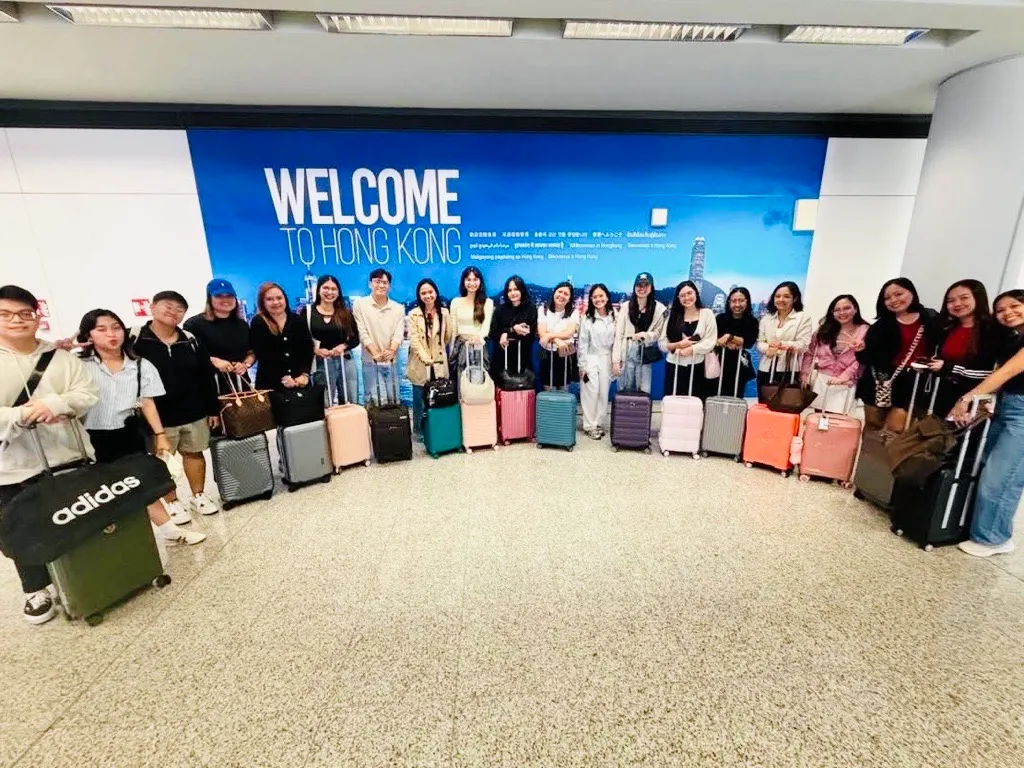
Employee engagement doesn’t happen by chance. It grows through trust, shared experiences, and meaningful relationships that extend beyond daily tasks and deadlines. Recently, members of the TeemCorp team traveled to Hong Kong. While the trip offered opportunities to experience a new city together, it also served as a reminder that investing in people is one of the most valuable investments any organization can make. Although productivity often takes center stage in business discussions, the strongest teams are built through connection. Experiences outside the office create opportunities for colleagues to collaborate differently, strengthen relationships, and return to work with renewed energy and perspective. Employee Engagement Goes Beyond the Office Employee engagement isn’t simply about job satisfaction. It’s about creating an environment where people feel connected, valued, and motivated to contribute their best. Shared experiences outside the workplace encourage conversations that don’t always happen during meetings or project deadlines. Whether exploring a new destination, attending a company event, or celebrating milestones together, these moments help build stronger relationships that naturally carry back into the workplace. When employees know one another beyond their job titles, communication becomes easier, collaboration improves, and trust develops more naturally. Strong Relationships Build Strong Teams High-performing teams are rarely created through processes alone. They are built through: Company events create opportunities for employees from different departments and roles to interact in ways that strengthen these qualities. For many organizations, these experiences become the foundation of a healthier workplace culture—one where people genuinely enjoy working together. Why Investing in People Matters Organizations often invest in technology, systems, and operational improvements. Equally important is investing in people. Investing in employees isn’t just good for workplace morale—it’s good for business. According to the Society for Human Resource Management (SHRM), organizations with strong workplace cultures are more likely to foster employee engagement, belonging, and long-term loyalty, all of which contribute to stronger organizational performance. Professional development, recognition programs, team-building activities, and company events all contribute to employee engagement and long-term retention. When employees feel supported and connected, businesses often experience: These outcomes aren’t achieved overnight. They are built through consistent investment in people. TeemCorp’s Commitment to People At TeemCorp, we believe that people are at the heart of every successful business. Our recent Hong Kong trip reflected more than just a company event—it represented our commitment to building meaningful connections within our own team. By creating opportunities for employees to learn, collaborate, and grow together, we continue to foster a workplace culture where individuals can thrive both personally and professionally. Because when people grow together, businesses grow stronger too. Workforce Solutions That Put People First Creating an engaged workforce requires more than filling positions. It requires building environments where employees feel connected, supported, and motivated to succeed. Whether through strategic recruitment, workforce planning, or initiatives that strengthen company culture, organizations that prioritize employee engagement are better positioned for long-term success. As businesses continue to evolve, one thing remains constant: investing in people is always a worthwhile investment. Looking to strengthen your workforce? Explore how TeemCorp’s Workforce Solutions help businesses attract, retain, and empower great people.
Managing Remote Teams Successfully: Your Guide

Running a small business often means wearing many hats. When you add remote staff to the mix, especially with outsourcing to the Philippines, it brings new opportunities and challenges. Introduction Running a small business often means wearing many hats. When you add remote staff to the mix, it brings new opportunities and challenges. This is especially true when you’re looking at options like outsourcing to the Philippines to grow your team. Getting it right means better productivity, happier staff, and more capacity for your business. Getting it wrong can create headaches and delays. It’s about setting things up so everyone can do their best work, no matter where they are. This guide will walk you through practical strategies for managing remote teams successfully, focusing on what works for Australian small businesses like yours. Why This Matters Recent findings from the ScotPac SME Growth Index highlight the importance of workforce stability for business growth. The report found that “one in three SMEs experienced higher staff attrition over the past year” and that workforce stability is increasingly determining which businesses are positioned for growth. This is one reason many Australian businesses are exploring remote and offshore staffing models to secure talent, strengthen team capacity, and support long-term scalability. Expanding your team with remote staff, particularly offshore, can dramatically reduce your operating costs. This frees up capital you can then reinvest into other areas of your business. Beyond cost savings, it also allows you to access a much wider talent pool. You’re not just limited to local hires, which is a big advantage in a tight job market. Ultimately, a well-managed remote team gives you more flexibility and capacity. It means you can take on more work, offer better service, and scale your business without the traditional overheads. Common Challenges Distance can make communication tricky; things can get lost in translation.Keeping everyone connected and feeling like part of the team is harder when you don’t see them daily. Time zone differences need careful planning to avoid late-night calls or missed deadlines.Ensuring everyone has the right tools and understands expectations can be a hurdle.Maintaining productivity and accountability without direct oversight requires trust and good systems. Practical Solutions Clear communication is key. Set up regular check-ins, both one-on-one and team-wide. Use video calls often to keep that personal connection strong. Invest in good collaboration tools. Shared documents, project management software, and instant messaging can bridge the distance. Make sure everyone knows how to use them effectively. Set clear expectations and KPIs (Key Performance Indicators) for remote staff. When everyone knows what’s expected and how success is measured, it’s easier to stay on track. This builds trust and accountability. Foster a strong team culture. Even remotely, celebrate wins, encourage informal chats, and create opportunities for social interaction. This helps remote team members feel truly part of your business. Regular feedback is crucial. Provide constructive feedback often, and also encourage your remote staff to share their ideas and concerns. This two-way street helps everyone grow. How Teemcorp Workforce Solutions Fits If you’re thinking about growing your team with managed offshore staff, like our Workforce Solutions, we help you set up these foundational pieces. We handle the office space, HR, and payroll for your remote team, letting you focus on their day-to-day work. How Teemcorp IT Solutions Fits Having the right IT infrastructure is non-negotiable for remote teams. From reliable email to secure cloud access and VoIP, good tech keeps everyone connected and productive. Our IT Solutions ensure your team has what they need to work seamlessly. How Teemcorp Growth Support Fits A growing team, whether local or remote, needs consistent lead generation and efficient systems. Our Marketing & Growth division can help set up CRM automation and other tools to ensure your new capacity translates into more business and smoother operations. Practical Checklist Building and managing a successful remote team doesn’t happen by accident. It requires thoughtful planning, the right tools, and a commitment to clear communication and culture. For Australian small businesses, tapping into remote talent, especially through outsourcing to the Philippines, offers a powerful way to scale efficiently. With the right strategies in place, your remote team can be a significant asset, helping you achieve more without adding complexity to your daily operations. Next Step Ready to explore how remote staff can help your business grow without complexity? Our team can help you assess your needs and identify the best way to integrate offshore talent. Book Readiness Assessment